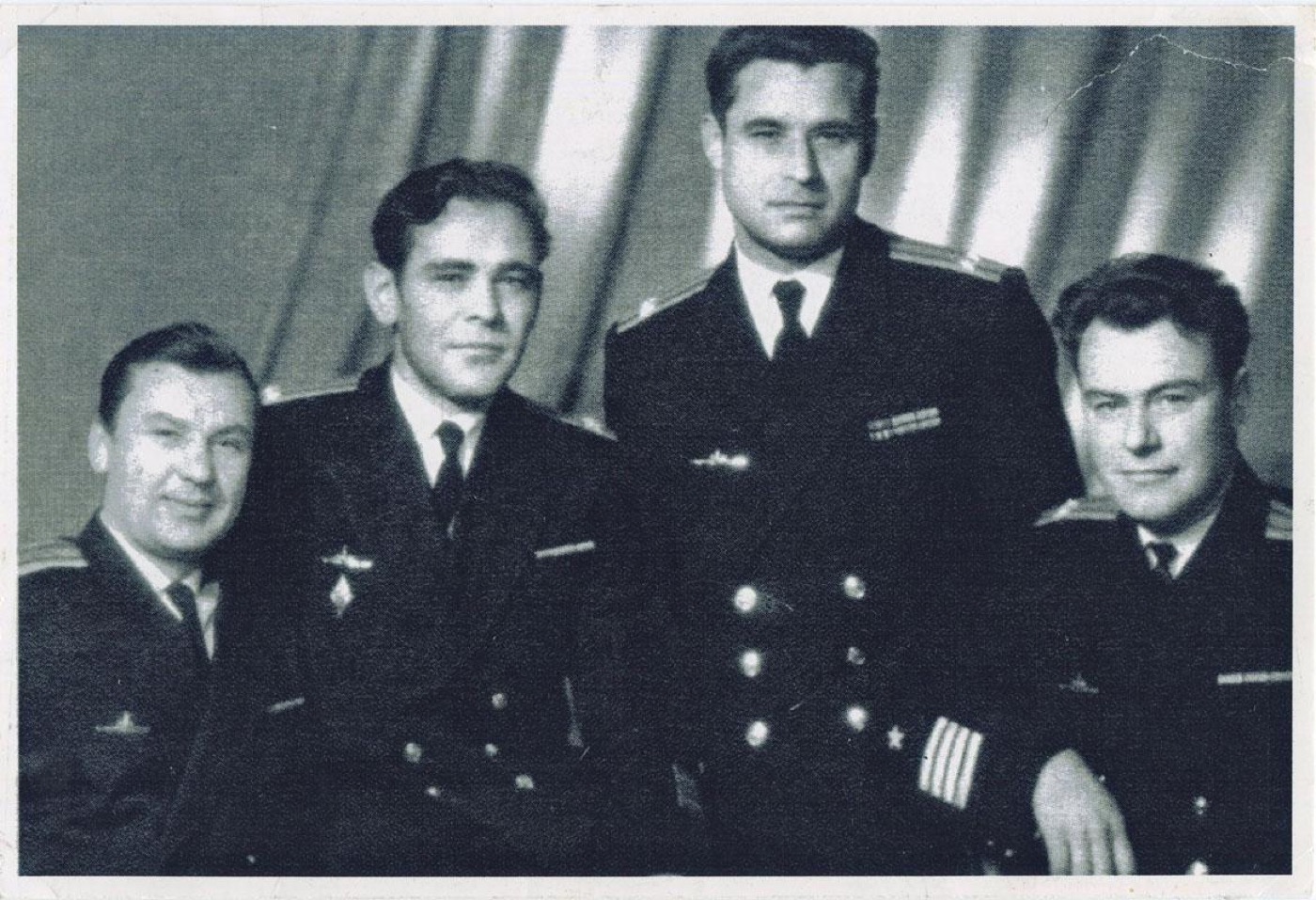
Vasili Arkhipov and Submarine B-59
A Soviet submarine captain, battered by depth charges and cut off from Moscow, orders a nuclear torpedo aimed at the American fleet. The political officer agrees. Under standard protocol, that is enough. But there is a third man aboard — a quiet officer who once watched his crewmates die of radiation poisoning. He says no. His name is Vasili Arkhipov, and the lives of 335 million people rest on his composure.
To understand what happened inside submarine B-59 on the afternoon of 27 October 1962, you first need to understand the world that built it, crewed it, and sent it to the Caribbean with a nuclear weapon aboard. The Cold War was not a distant geopolitical abstraction. It was an existential condition — a seventeen-year escalation in mutual hostility between the United States and the Soviet Union, underwritten by enough nuclear warheads to extinguish civilisation several times over.
The architecture of this standoff emerged from the ashes of the Second World War. The United States had ended the Pacific war by dropping atomic bombs on Hiroshima and Nagasaki in August 1945, killing over 200,000 people and demonstrating a weapon of annihilation that the rest of the world could only observe. The Soviet Union, which had lost an estimated 27 million citizens in the war, understood the message clearly. By 1949, it had detonated its own atomic bomb. By 1953, both nations had tested hydrogen bombs — weapons a thousand times more powerful than the Hiroshima device.
What followed was a nuclear arms race of staggering scale. By 1962, the United States held approximately 27,000 nuclear warheads. The Soviet Union held roughly 3,000. The arithmetic of deterrence had a name: Mutual Assured Destruction — MAD. The doctrine held that neither side would launch a first strike because the other side's retaliatory capacity guaranteed the destruction of both. Peace through the promise of annihilation.
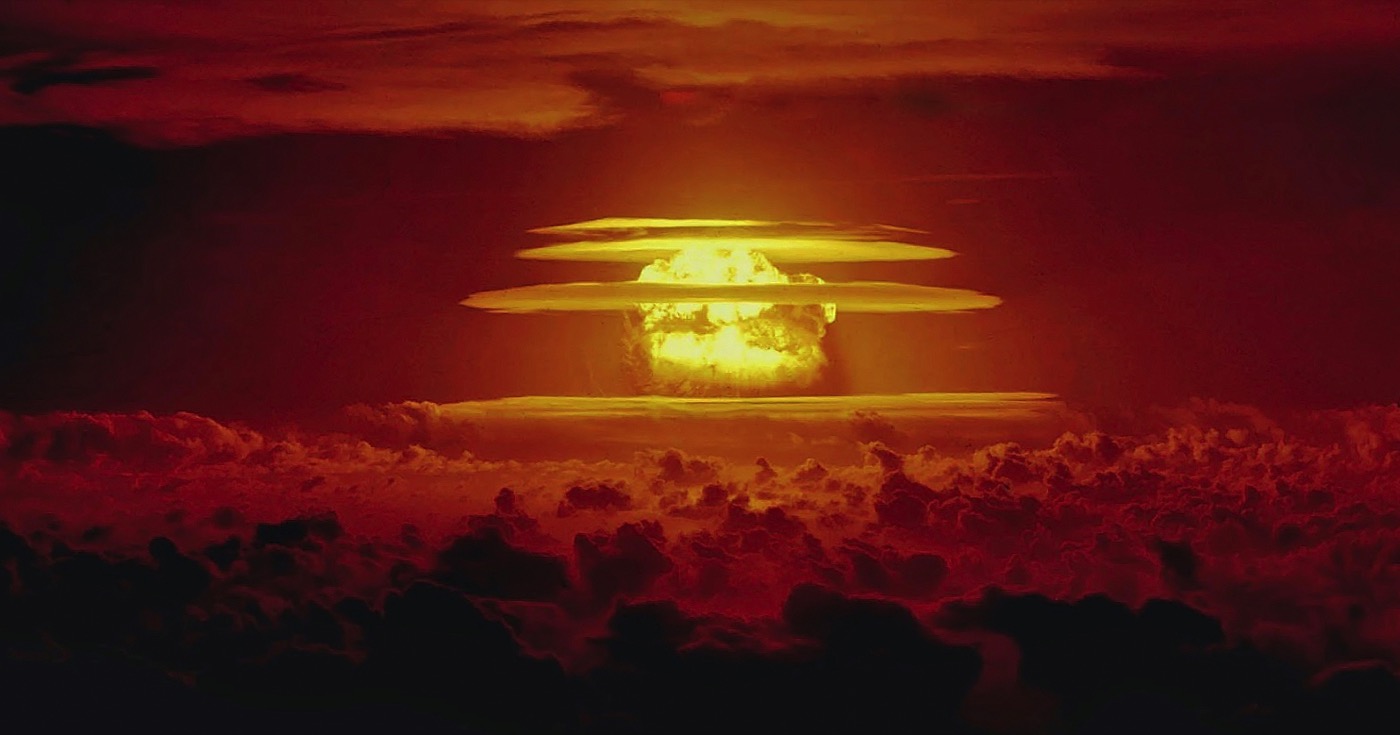
The US military's Single Integrated Operational Plan for 1962 (SIOP-62) called for the near-simultaneous launch of 3,200 nuclear warheads against the Soviet Union, China, and Eastern Europe in the event of war. Estimated casualties in the first 72 hours: 335 million dead, with hundreds of millions more expected from fallout, firestorms, and the collapse of agriculture.
This was the world ordinary people inhabited. American schoolchildren practised "duck and cover" drills, crouching under their desks as though plywood could shield them from a thermonuclear fireball. Families built backyard fallout shelters. Soviet citizens endured similar civil defence rituals. The possibility of total war was not hypothetical — it was a permanent background condition, like weather.
The years immediately before the Cuban Missile Crisis saw a rapid deterioration in superpower relations, driven by a sequence of crises that each ratcheted the tension higher and left both sides with less room to manoeuvre.
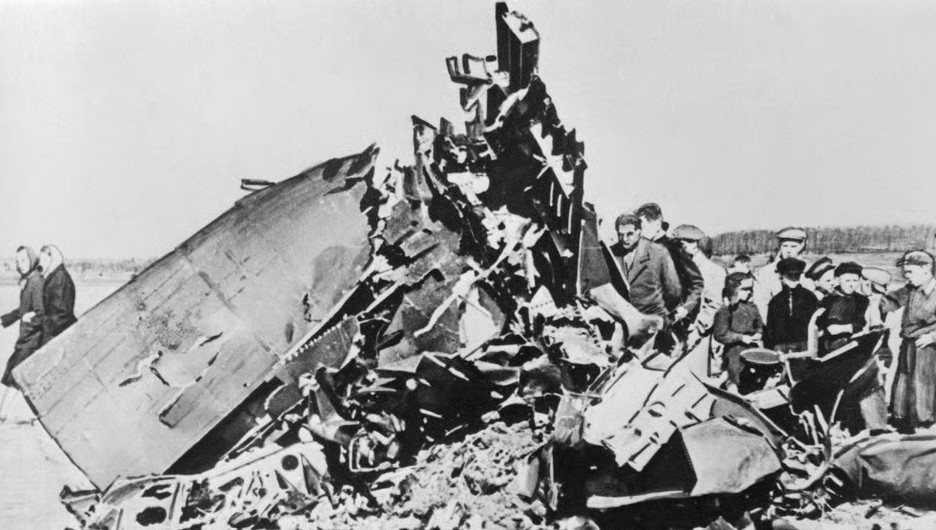
The U-2 shootdown (1 May 1960). An American U-2 spy plane piloted by Francis Gary Powers was shot down deep inside Soviet airspace. The Eisenhower administration deployed a cover story — a weather plane had strayed off course due to oxygen difficulties. Khrushchev sprung a trap, revealing that the Soviets had recovered both the wreckage and the pilot alive. When Eisenhower refused to apologise, Khrushchev walked out of the Paris Summit. The "Spirit of Camp David" — a fragile diplomatic thaw between the superpowers — shattered overnight.
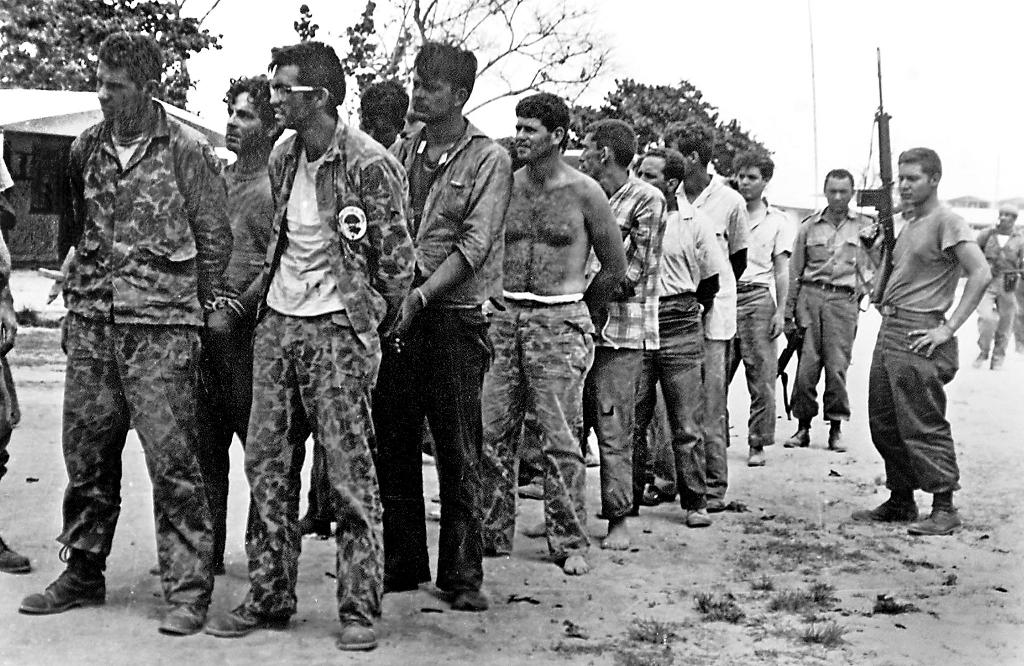
The Bay of Pigs (April 1961). Less than three months into the Kennedy presidency, the CIA launched a catastrophically bungled invasion of Cuba using Cuban exile forces. It failed within three days. The debacle humiliated the young president and signalled to Khrushchev that Kennedy was inexperienced and indecisive — an assessment that would prove consequential.
The Vienna Summit (June 1961). Kennedy and Khrushchev met face to face for the first time. Khrushchev took an aggressive, bullying tone, shocking Kennedy with threats of war over Berlin. Afterwards, Kennedy confided to New York Times journalist James Reston:
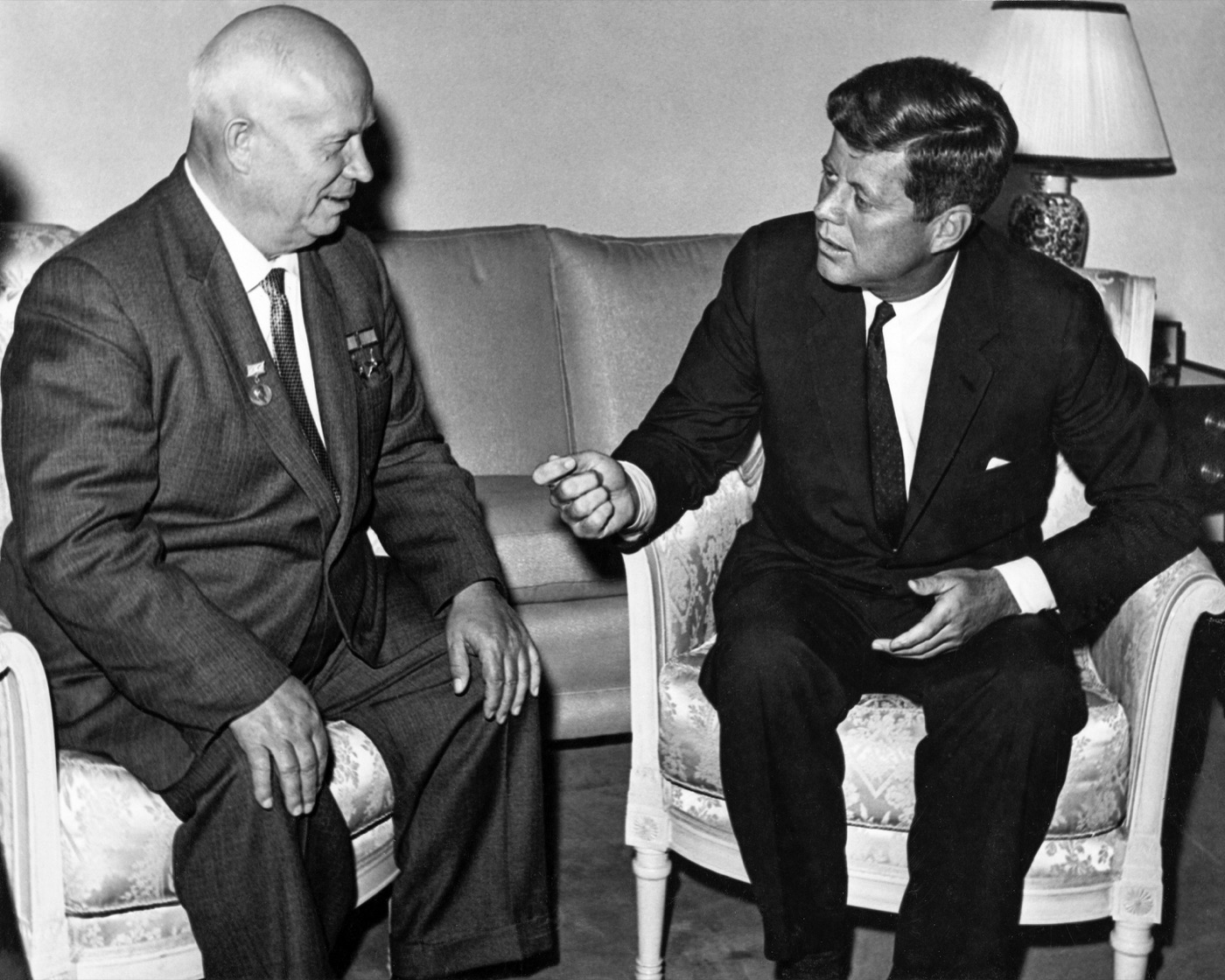
"He thought anyone who was so young and inexperienced as to get into that mess could be taken, and anyone who got into it and didn't see it through had no guts. So he just beat the hell out of me." — President John F. Kennedy, June 1961
The Berlin Wall (August 1961). Khrushchev's assessment of Kennedy as weak bore immediate fruit. In August, the Soviets and East Germans began constructing the Berlin Wall to stem the mass defection of citizens to the West. Kennedy acquiesced, concluding he preferred a wall to a war. This lack of forceful response convinced Khrushchev that Kennedy would similarly back down if nuclear missiles were placed in Cuba.
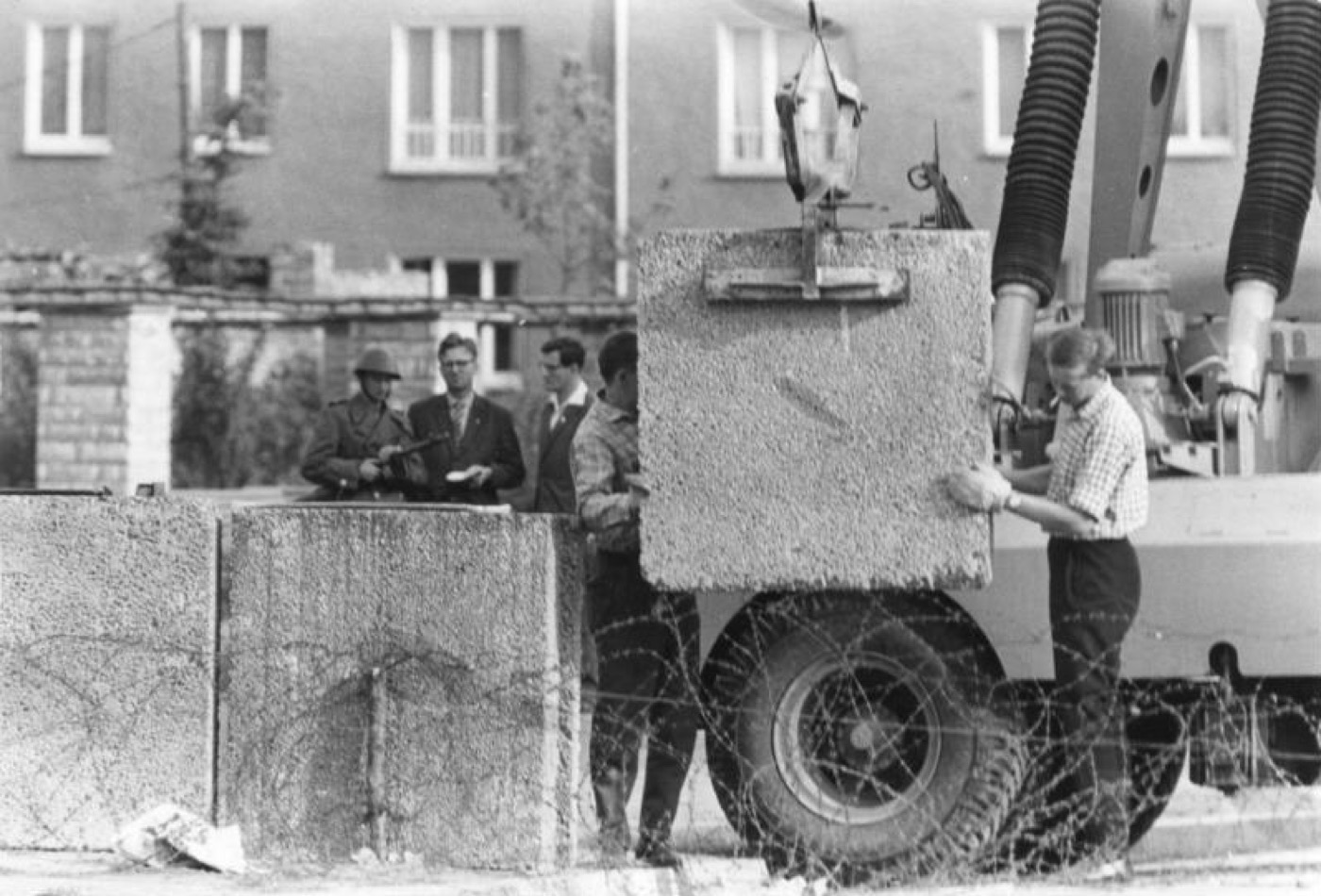
Each of these events followed the same pattern: provocation, miscalculation, the discovery that the other side was less predictable than assumed. By the autumn of 1962, both leaders were operating from distorted mental models of each other — Khrushchev convinced Kennedy was weak, Kennedy determined not to appear weak again. This was the psychological architecture of the crisis to come.
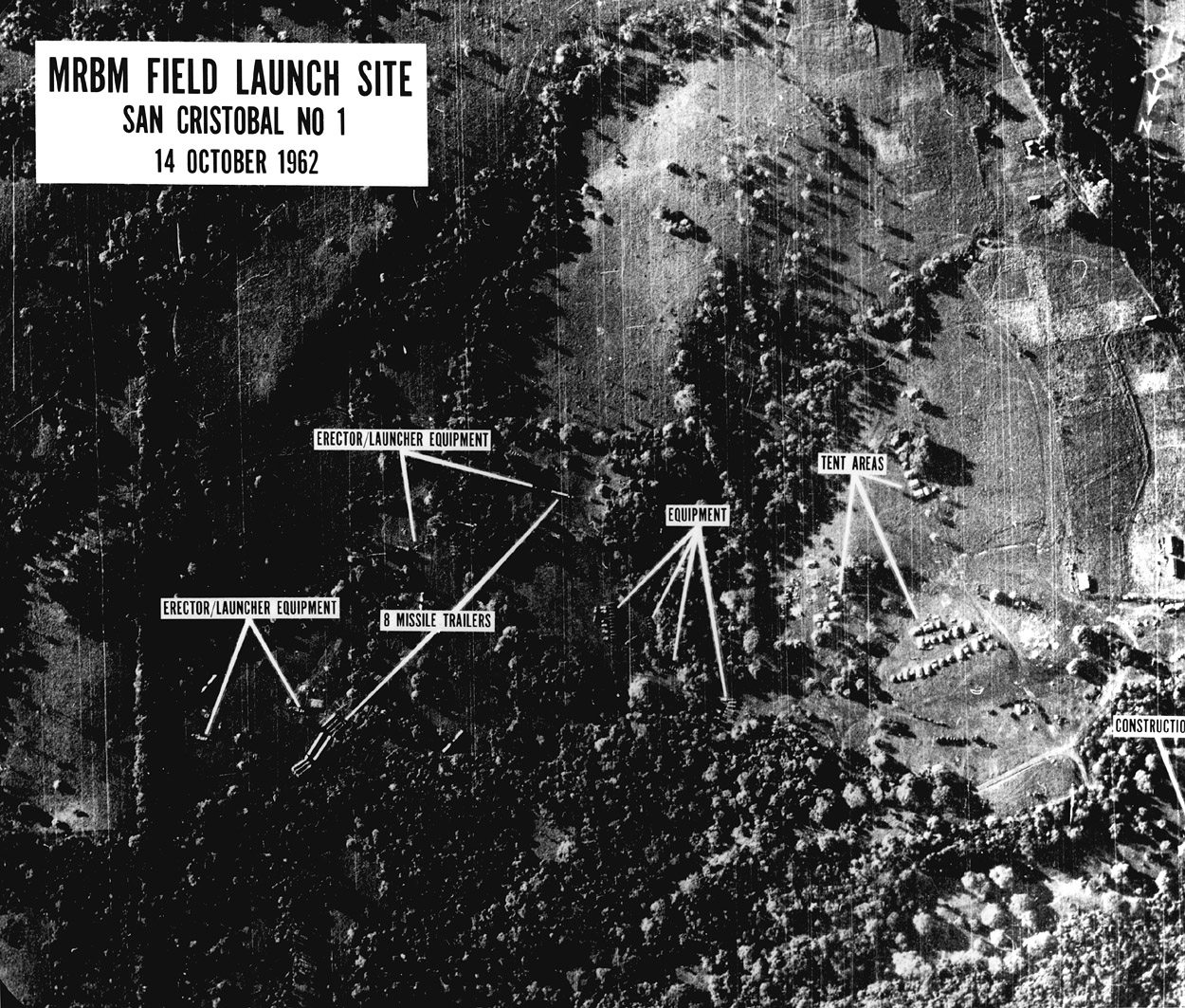
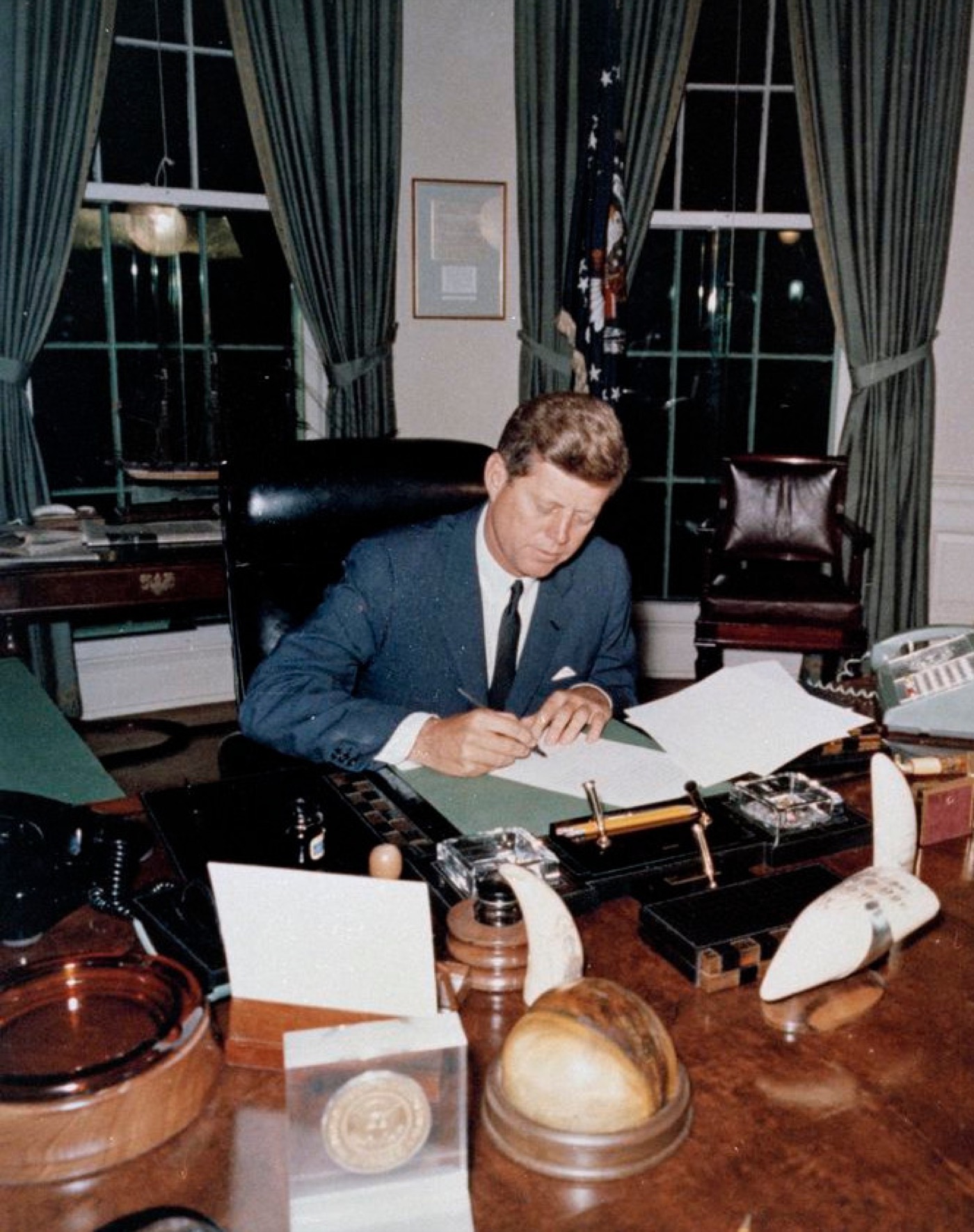
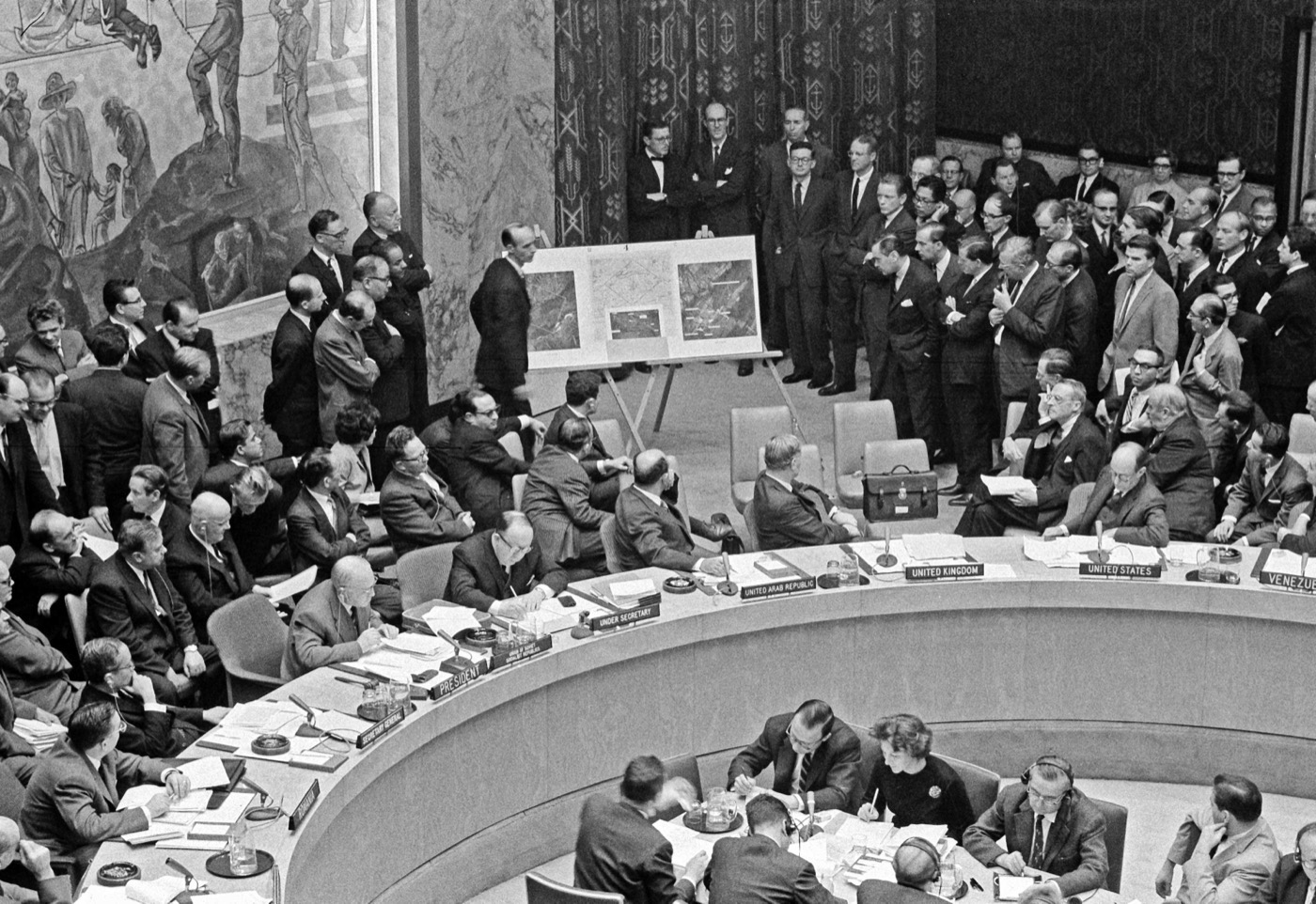
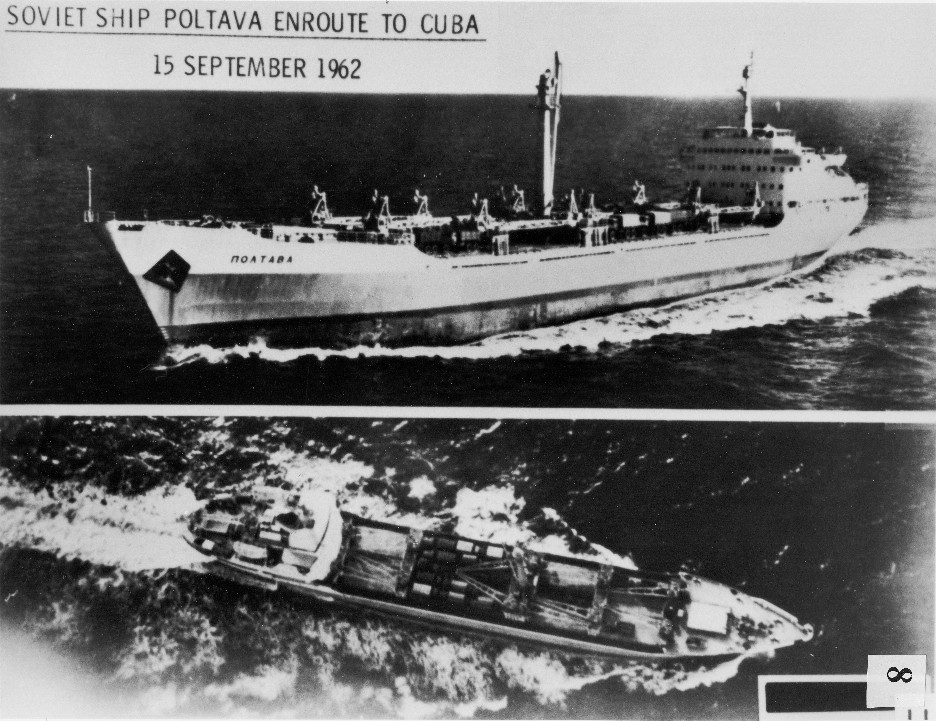
On the morning of 16 October 1962, National Security Adviser McGeorge Bundy brought President Kennedy a set of photographs. A U-2 reconnaissance flight over Cuba, flown two days earlier, had captured images of Soviet medium-range ballistic missile sites under construction near San Cristóbal. The missiles, once operational, could reach Washington, D.C. in thirteen minutes.
Kennedy convened the Executive Committee of the National Security Council — ExComm — and for the next thirteen days, the most dangerous diplomatic crisis in human history unfolded behind closed doors. The options ranged from a full-scale invasion of Cuba to a surgical airstrike on the missile sites to a naval blockade. Kennedy chose the blockade, though he called it a "quarantine" to avoid the legal implications of an act of war.
On 22 October, Kennedy went on national television and informed the American public — and, by extension, the world — that Soviet nuclear missiles were ninety miles from Florida. He demanded their removal and announced the naval quarantine. For the first and only time in history, US Strategic Air Command was raised to DEFCON 2 — one step below nuclear war. B-52 bombers armed with thermonuclear weapons took to the air in continuous rotation, ready to strike the Soviet Union on fifteen minutes' notice.
The crisis reached its most dangerous point on Saturday, 27 October 1962 — the day that would later be called "Black Saturday." On this single day:
A new, more belligerent message from Khrushchev arrived, demanding the removal of US Jupiter missiles from Turkey in exchange for withdrawing from Cuba — contradicting a more conciliatory letter received the previous evening. ExComm was thrown into confusion by the conflicting signals.
A Soviet SA-2 surface-to-air missile destroyed a U-2 reconnaissance aircraft over Cuba, killing pilot Major Rudolf Anderson — the only combat fatality of the crisis. The shoot-down was ordered by local Soviet commanders without authorisation from Moscow, a fact Kennedy did not know at the time.
A separate U-2 on an air-sampling mission near Alaska accidentally strayed into Soviet airspace over the Bering Sea. Soviet MiGs scrambled to intercept. American F-102 fighters — armed with nuclear-tipped air-to-air missiles — were dispatched to escort the U-2 home. For several minutes, nuclear-armed American jets and Soviet interceptors were converging over the Arctic. Any engagement could have been read as a first strike.
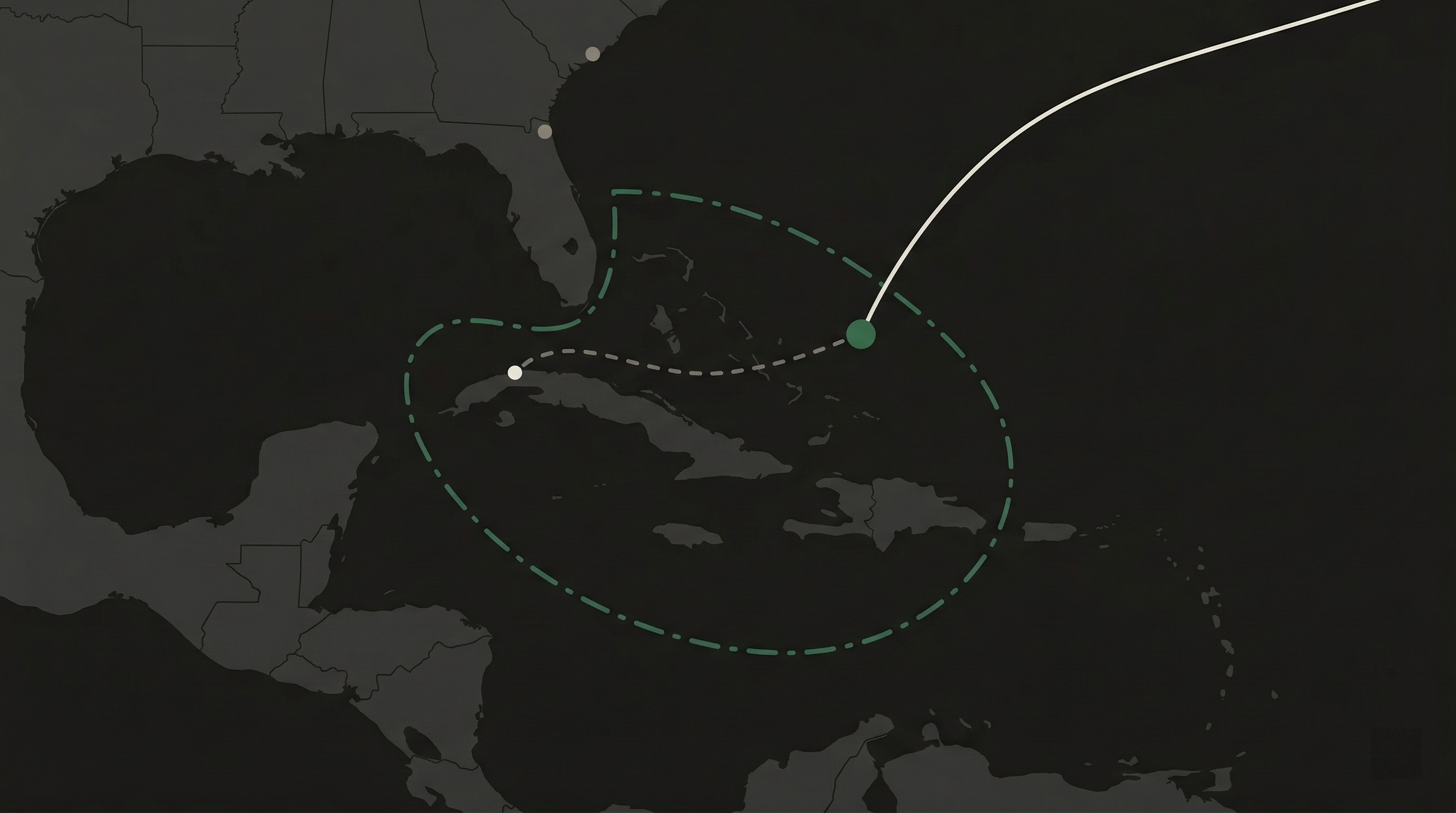
In the North Atlantic near Cuba, US Navy destroyers corner Soviet submarine B-59. Inside the submarine, cut off from Moscow, Captain Savitsky orders a nuclear torpedo readied for launch. The story this article tells.
Attorney General Robert Kennedy met Soviet Ambassador Anatoly Dobrynin at the Justice Department and delivered a stark ultimatum: remove the missiles, or the United States would remove them by force.
None of these events were coordinated. None of the actors in one crisis knew about the others happening simultaneously. The system was producing emergent dangers that no individual — including the two heads of state — could see or control. This is the nature of systemic risk at scale: the catastrophe does not arrive as a single decision, but as the accidental convergence of independent failures.
The U-2 shootdown over Cuba was authorised by local Soviet commanders, not Moscow. The B-59 torpedo confrontation occurred because the submarine's crew could not contact Moscow. In both cases, the central command structure — the very architecture designed to prevent unauthorised escalation — had failed. Decisions that could trigger nuclear war were being made by mid-ranking officers acting on incomplete information, hundreds of miles from any head of state.
Kennedy did not know a Soviet submarine had nearly launched a nuclear torpedo. He would not learn about it for the rest of his life. The B-59 incident remained classified for forty years.
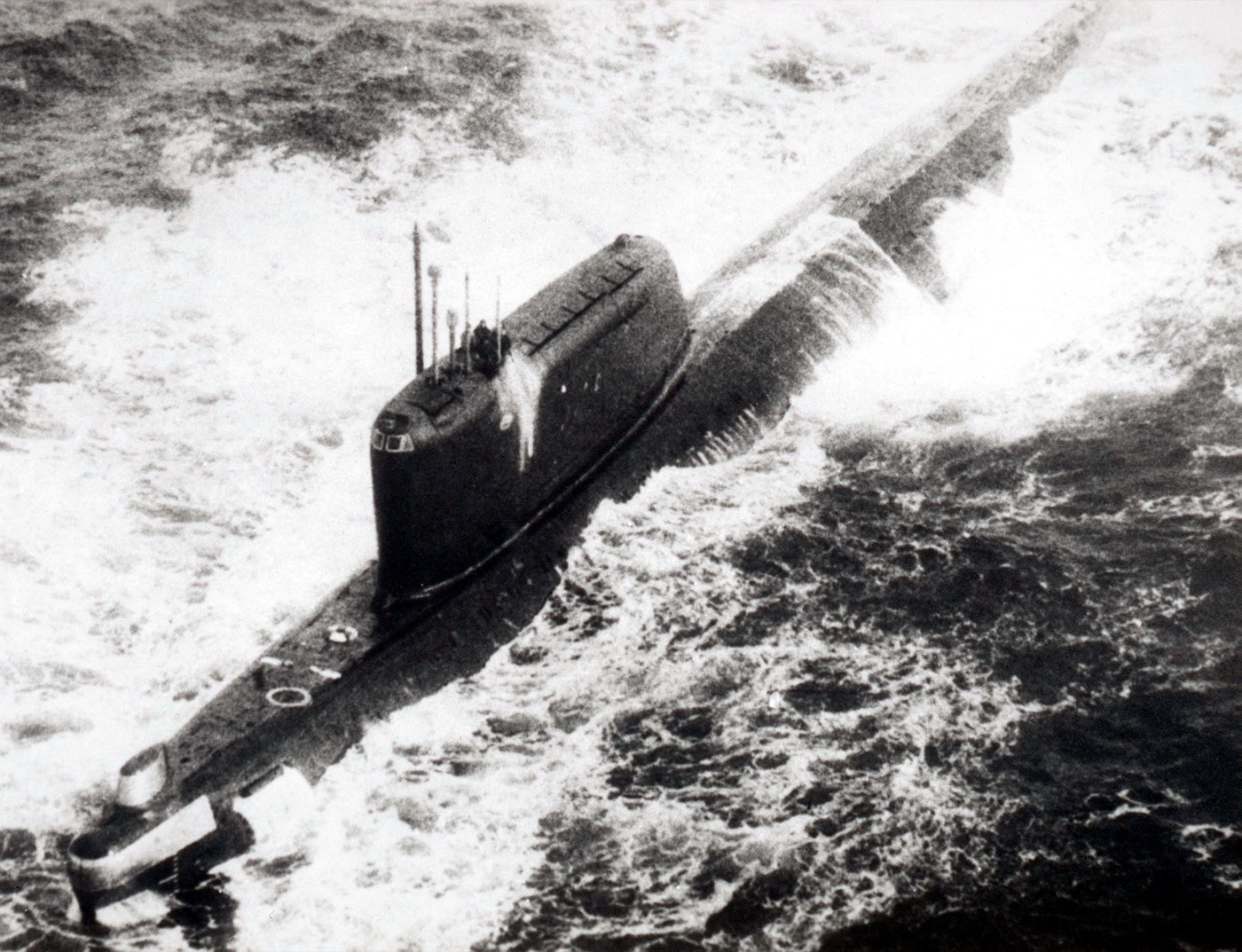
The submarine at the centre of this story was a Project 641 — NATO designation "Foxtrot" — a diesel-electric attack submarine designed for the cold, deep waters of the North Atlantic and the Arctic Ocean. It was 91.5 metres long, carried a crew of 78, and was powered by three diesel engines for surface running and three electric motors for submerged operations. It could dive to a maximum depth of approximately 250 metres and make 15–16 knots submerged — though at that speed, it would drain its batteries in hours.
The Foxtrot was a Cold War workhorse — reliable, quiet, well suited to its intended operating environment. It was not, however, designed for tropical water. It had no air conditioning. In the frigid North Atlantic, this was irrelevant. In the Caribbean Sea in October, where surface water temperatures exceeded 27°C, it was a design flaw with catastrophic consequences for crew endurance.
In early October 1962, as the Cuban Missile Crisis gathered momentum, the Soviet Navy dispatched four Foxtrot-class submarines from their base in Polyarny, near Murmansk, to Cuba. The operation was codenamed Kama. The four boats — B-4, B-36, B-59, and B-130 — were tasked with establishing a submarine presence at the new Soviet naval base in Mariel, Cuba.
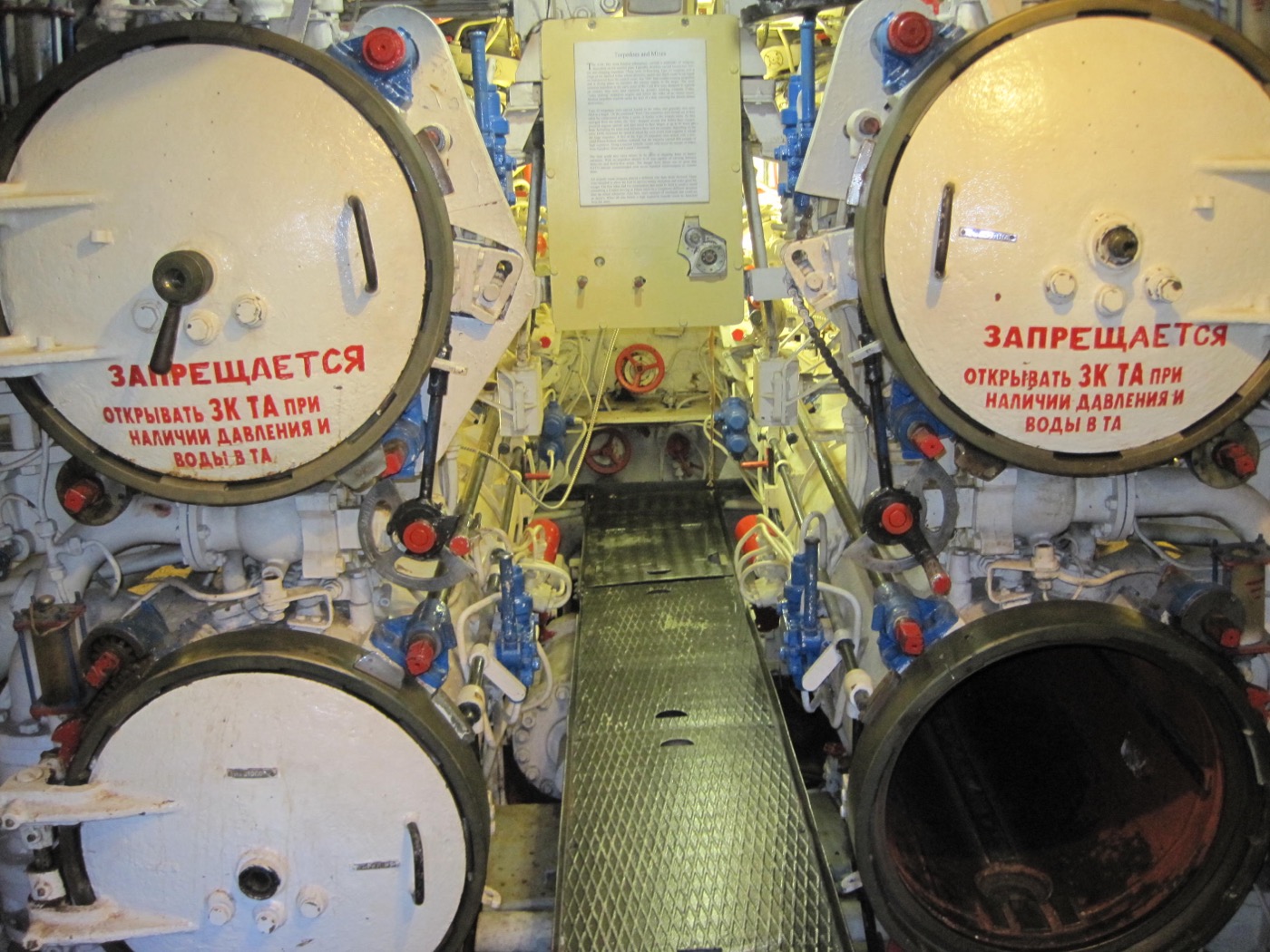
Each submarine carried 22 torpedoes. Among them was one very different weapon: a T-5 nuclear torpedo.
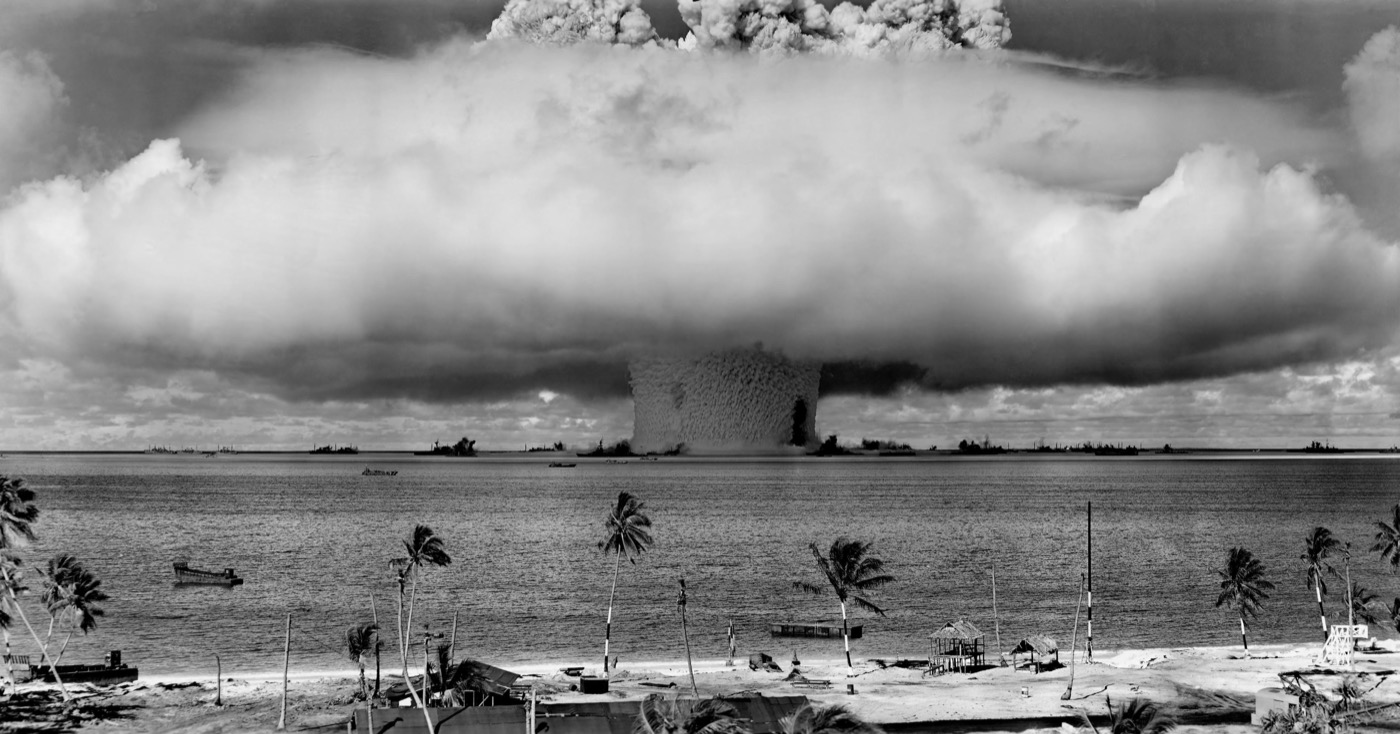
The T-5 carried a warhead with a yield of 10 to 15 kilotons — functionally equivalent to the bomb dropped on Hiroshima. Detonated underwater, it would produce a hydraulic shockwave capable of crushing the hulls of surface ships within half a mile, causing severe damage at one mile, and generating a massive column of highly radioactive water that would rain lethal contamination over surviving vessels for miles. The submarine that fired it would almost certainly be destroyed by its own weapon.
This is the detail that matters most in this story — the process architecture that either prevents or permits the use of a nuclear weapon.
On a standard Soviet submarine in 1962, launching a nuclear torpedo required the agreement of two officers: the captain and the political officer (the zampolit). Two keys. Two votes. Unanimity required. If both agreed, the weapon could be fired without contacting Moscow.
On B-59, the protocol was different — but only by accident.
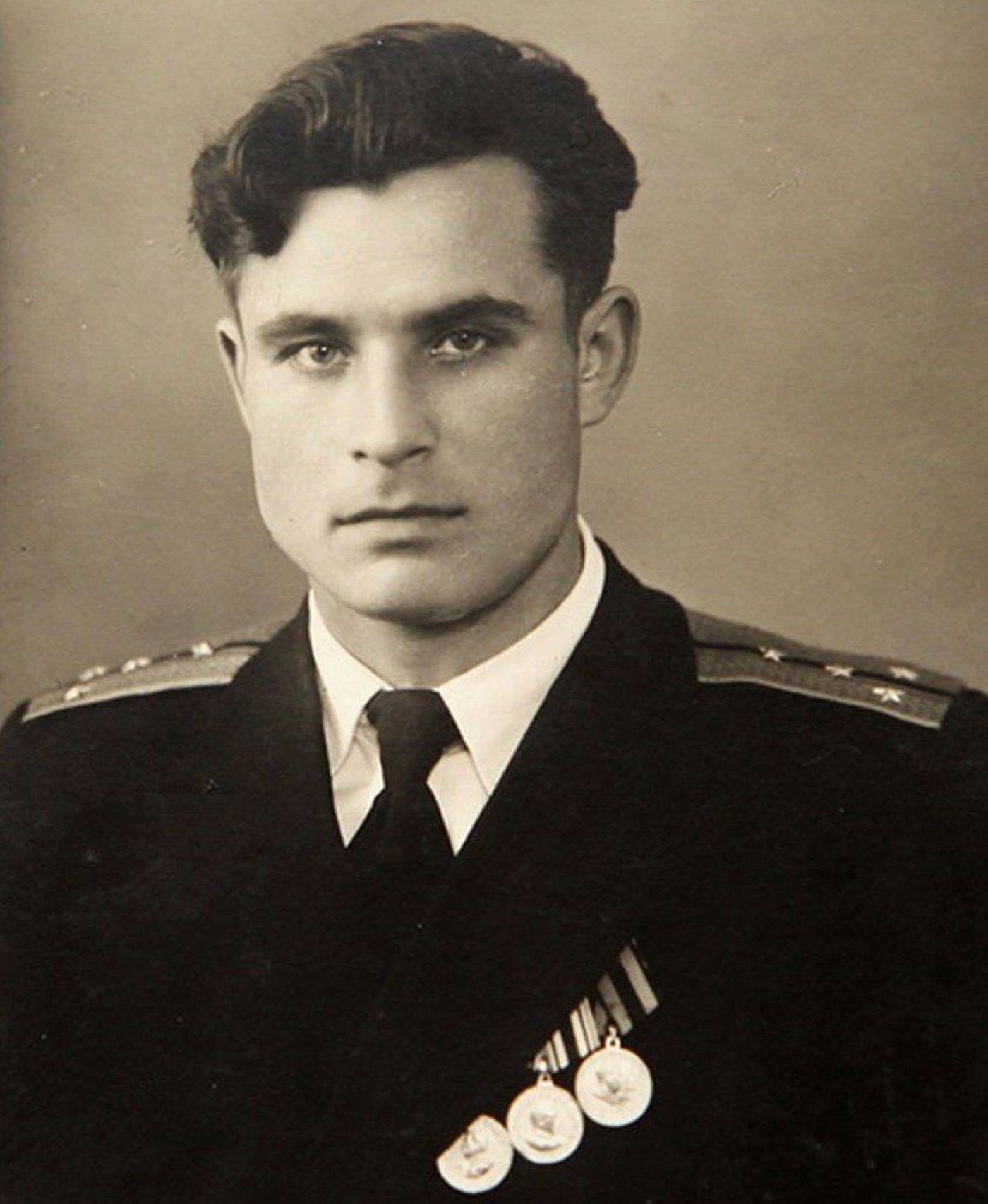
Captain Second Rank Vasili Arkhipov was the chief of staff for the entire four-submarine flotilla. He needed to be aboard one of the boats for the transit, and he was assigned to B-59 — where he also served as the boat's executive officer, second in the chain of command. His presence meant that B-59 — and only B-59 — required three officers to agree before the nuclear torpedo could be launched: the captain, the political officer, and the flotilla chief of staff.
The three-key requirement on B-59 was not a deliberate safety measure. It was a bureaucratic coincidence. On any of the other three submarines — B-4, B-36, or B-130 — only two keys were needed. If the confrontation that occurred on B-59 had instead occurred on any other boat in the flotilla, the captain and political officer could have launched the torpedo with no one to overrule them.
Before departure, the submarine commanders received their instructions regarding the nuclear weapons. The briefing was verbal, not written — itself a systemic failure. Vice-Admiral A.I. Rassokha gave specific criteria for launch: if the submarine was hulled below the waterline, if it was hulled above the waterline while surfaced and under fire, or if direct orders came from Moscow. These were relatively disciplined rules of engagement.
But Admiral V.A. Fokin, who also addressed the departing crews, struck a different tone entirely. He reportedly told the submariners: "If they slap you on the left cheek, do not let them slap you on the right one." The implication was unmistakeable: fight back first, report later.
Two admirals. Two contradictory messages. One verbal, nothing written down. The men who would carry nuclear weapons into a potential war zone left port with ambiguous instructions about when they were permitted to use them.
There was one more gap in the system, and it was arguably the most dangerous of all.
Diesel-electric submarines of this era could only receive long-range radio transmissions from Moscow when they were at or near the surface — either surfaced fully, or running at periscope depth with a snorkel mast raised. The moment a Foxtrot dived below snorkel depth, it was cut off from all communication with headquarters.
The entire authorisation framework for nuclear weapons assumed that the submarines could, if needed, contact Moscow for orders. But the submarines were being sent into waters patrolled by the most powerful anti-submarine warfare force in the world. The moment the US Navy detected them, they would be forced deep — and the moment they went deep, they lost contact with Moscow.
The Soviet Navy command knew this. They dispatched the submarines anyway.
A December 1962 post-crisis report from the USSR Northern Fleet Headquarters would later identify these failures explicitly, noting that the submarines "were not designed to be used in tropical conditions" and that US anti-submarine warfare forces were "a hundred times stronger than ours." The operation, the report concluded, had been fundamentally misconceived.
Before we descend into the ocean, meet the four men whose decisions — and whose characters — determined what happened next.
Born 30 January 1926. Career naval officer, quiet and methodical. Fellow captain Ryurik Ketov described him as someone who "stood out for being cool-headed. He was in control. He was a real submariner."
To understand Arkhipov's actions on 27 October 1962, you need to know what happened to him fourteen months earlier, aboard a different submarine entirely.
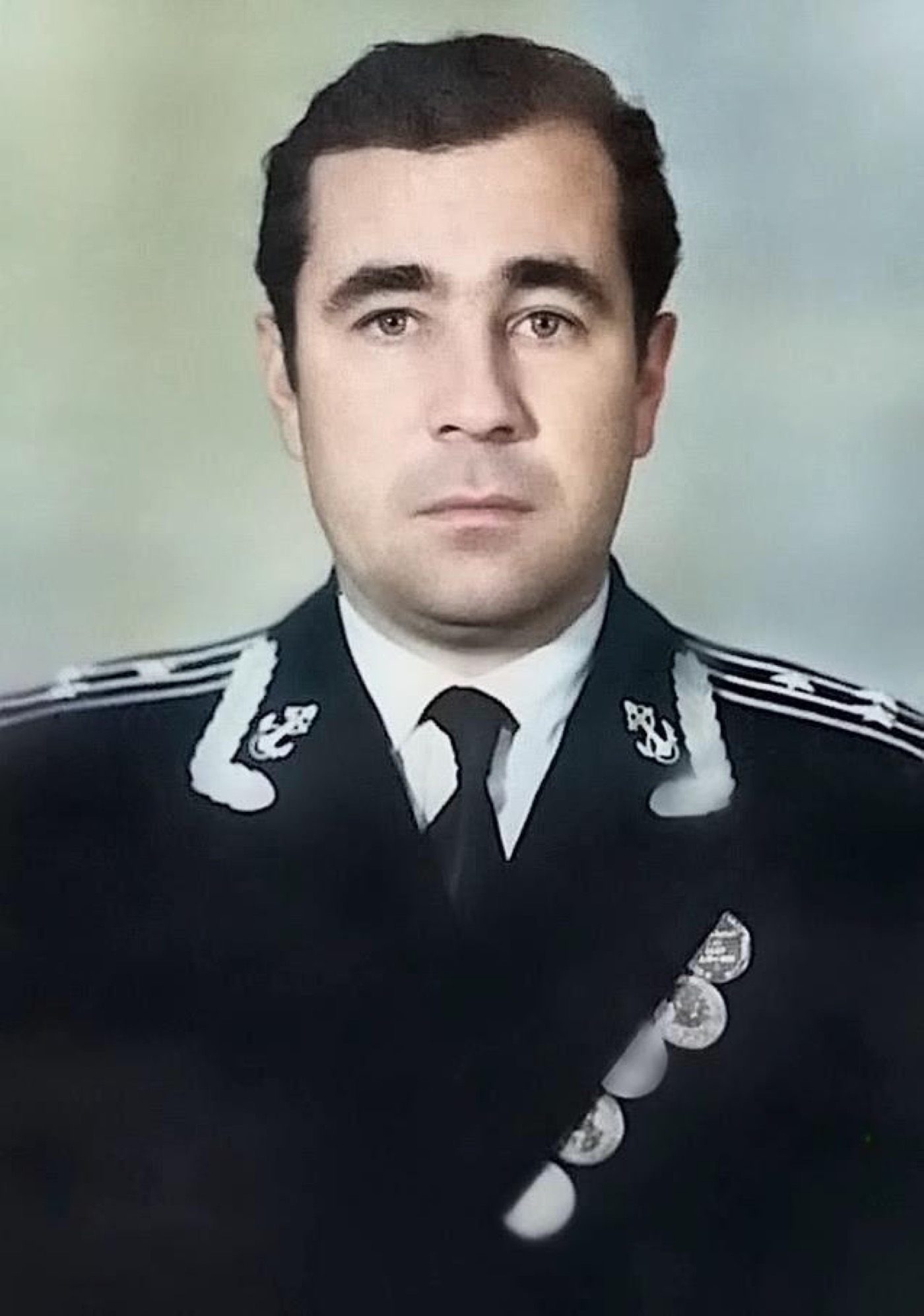
An experienced submarine commander — hardened, respected, and by temperament what his crew described as "an emotional person" who was "easily provoked" and "short tempered." Signals intelligence officer Vadim Orlov recalled his first impression: Savitsky looked at the 25-year-old Orlov like a "green youth" and grumbled at his presence.
None of this made Savitsky a bad commander. It made him human — a professional who, under the right conditions, could be pushed past the point where training overrides emotion.
The zampolit — the Communist Party's representative aboard the submarine, tasked with ensuring adherence to doctrine and acting as co-guarantor of the captain's decisions. Almost nothing is known about Maslennikov's life before or after B-59. He is a ghost in the historical record. What we know is that when the moment came, he agreed with his captain.
Twenty-five years old in October 1962. A signals intelligence specialist, not a submariner by training. Orlov would become the principal eyewitness to the events aboard B-59 — first in a 2000 interview with author Peter Huchthausen, then in more dramatic testimony at the 2002 Havana conference on the Cuban Missile Crisis. His account is the foundation of everything we know about the vote.
On 4 July 1961 — fourteen months before the Cuban Missile Crisis — the newly commissioned nuclear ballistic missile submarine K-19 was operating off the southeast coast of Greenland when it suffered a complete loss of coolant to one of its two nuclear reactors. A backup cooling system had not been installed during the submarine's rushed construction. Radio communications also broke down, isolating the crew from Moscow.
Vasili Arkhipov was the deputy commander — the executive officer — of K-19.
To prevent a catastrophic nuclear meltdown that could have contaminated a vast area of the North Atlantic, Captain Nikolai Zateyev ordered the engineering crew to improvise a secondary coolant system from available pipes and welding equipment. The men worked in compartments with lethal radiation levels, fully aware of what the exposure would do to them. They succeeded in stabilising the reactor. Seven of them — the entire engineering team plus their divisional officer — were dead from acute radiation syndrome within a month. Over the next two years, fifteen additional crew members died from the aftereffects of radiation exposure.
Arkhipov stood by the captain throughout. When fears of a crew mutiny grew so severe that Zateyev had all small arms thrown overboard — keeping only five pistols, which he distributed to his most trusted officers — Arkhipov was one of those trusted men. He helped maintain order while the engineers sacrificed themselves to save the ship.
Arkhipov himself was heavily irradiated. The exposure is widely believed to have caused the kidney cancer that killed him in 1998, at the age of 72.
"He always thought that he did what he had to do and never considered his actions as heroism. He acted like a man who knew what kind of disasters can come from radiation." — Elena Andriukova, Arkhipov's daughter, 2017
This is the man who was aboard B-59 when Savitsky wanted to detonate a nuclear weapon. Not a theoretician. Not a politician. A man who had watched radiation kill his crewmates slowly, over weeks and months, and who carried the consequences in his own body. When the question was put to him — do we fire a 15-kiloton nuclear torpedo? — he was the one person in the control room who understood, viscerally and physically, what nuclear detonation actually means.
The US Navy's strategy for dealing with Soviet submarines during the quarantine was brutally simple: find them, track them, and force them to the surface by draining their batteries. The tactic was called "hunt to exhaustion," and it exploited the fundamental limitation of diesel-electric submarines — they had to surface periodically to run their diesel engines and recharge. Keep them down long enough, and physics would do the rest.
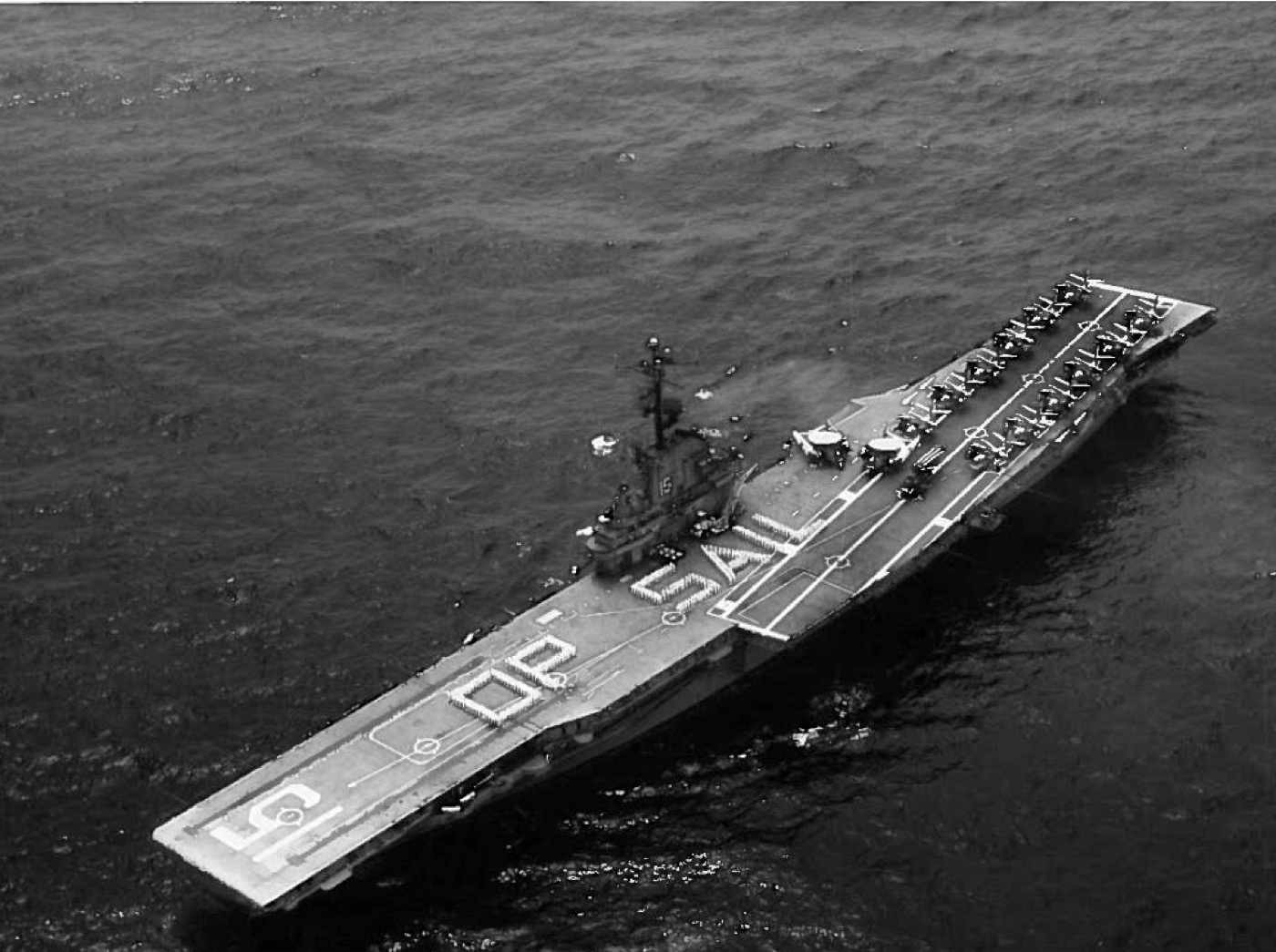
The anti-submarine warfare task group hunting B-59 was designated Task Group 83.2, built around the aircraft carrier USS Randolph and including destroyers USS Beale, USS Cony, and USS Bache. The group employed a layered detection system: P-2 Neptune patrol aircraft dropped sonobuoys and used Magnetic Anomaly Detectors (MAD) to locate the submarines, then vectored destroyers in for close pursuit. The Navy's Sound Surveillance System (SOSUS) — a network of underwater hydrophones — was active but had difficulty tracking the Foxtrot boats, which were quieter than expected.
On 27 October, the destroyers found B-59.
Secretary of Defence Robert McNamara had authorised the use of "practice depth charges" as a signalling device — a way to tell the Soviet submarines to surface and identify themselves. On 24 October, the US had broadcast a Notice to Mariners (NOTMAR) explaining the protocol: the dropping of four or five harmless explosive signals, accompanied by the sonar code "IDKCA," meant "rise to surface."
The notice was broadcast on open radio frequencies. B-59, forced deep by the pursuing destroyers, never received it.
The "practice depth charges" were hand grenades. Lieutenant John W. Peterson of USS Beale, frustrated that grenades dropped on the surface merely sounded like firecrackers, devised an improvisation: his crew stuffed the grenades into cardboard toilet paper tubes. The cardboard held the safety pin in place as the grenade sank, then disintegrated at depth, releasing the pin and detonating the grenade directly alongside the submarine's hull.
"It felt like you were sitting in a metal barrel which somebody is constantly blasting with a sledgehammer." — Vadim Orlov, signals intelligence officer, B-59
Water is dense and relatively incompressible. It transmits shockwaves with devastating efficiency. Inside B-59, every detonation was a physical assault — a percussive blow that shook the hull, rattled fittings, and hammered the crew's nerves. The Americans dropped these charges for approximately four hours.
The men aboard B-59 had no idea they were "signals." They believed they were under attack.
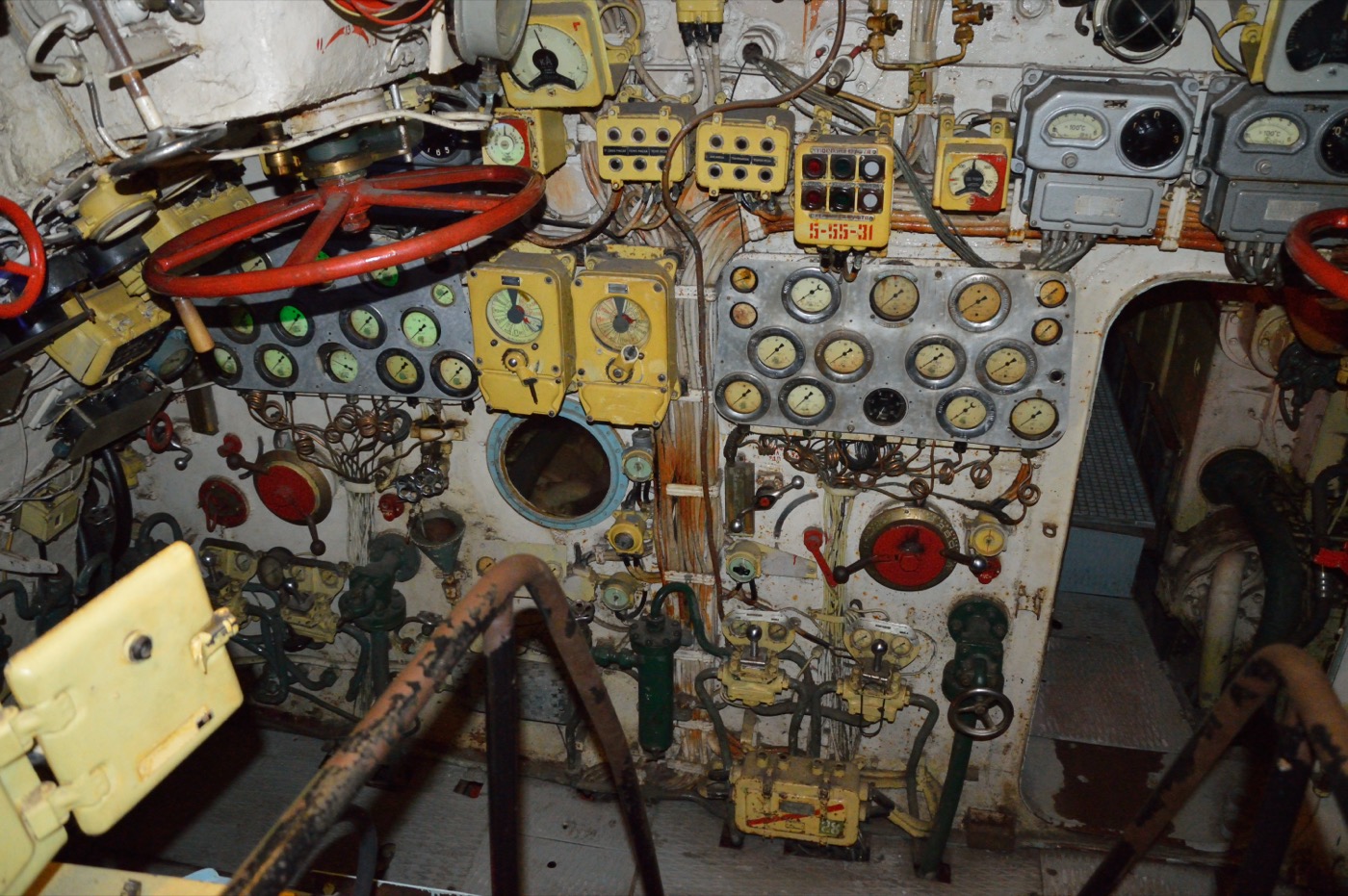
B-59 had been submerged for days, running on battery power in tropical water its designers never anticipated. The interior was a sauna. Average air temperature had reached 45°C. In the engine compartments, it peaked at 60 to 65°C — temperatures at which prolonged exposure causes heatstroke, organ damage, and death.
Carbon dioxide levels climbed to near-lethal concentrations. Crew members began losing consciousness.
"One of the duty officers fainted and fell down. Then another one followed, then the third one. They were falling like dominoes." — Vadim Orlov
Fresh water was rationed. Skin rashes were rampant. The crew had stripped to their underwear. Submariner Anatoly Andreyev would later write in his diary that crew members lost 30 to 40 per cent of their body weight — almost certainly an exaggeration born of extreme conditions, but reflective of the perceived severity. Biologically, such loss would be fatal; the reality was likely severe dehydration and malnutrition producing a visceral sense of physical deterioration.
The accumulators — the batteries that powered the submarine underwater — were, in Orlov's words, "discharged to the state of water." B-59 was running out of everything: power, air, water, and the physical endurance of its crew.
And overhead, every few minutes, another explosion against the hull.
Captain Valentin Savitsky is at breaking point. He is, in Orlov's account, "totally exhausted" and "furious." His submarine is being hammered by explosions he believes are depth charges. His crew is collapsing from heat and CO2 poisoning. His batteries are nearly dead. He has had no contact with Moscow for days and, for all he knows, the war has already started above them.
Savitsky orders the nuclear torpedo assembled for combat launch.
"Maybe the war has already started up there, while we are doing somersaults here! We're going to blast them now! We will die, but we will sink them all — we will not disgrace our Navy!" — Captain Valentin Savitsky, as recalled by Vadim Orlov (2002 testimony)
The phrasing is telling. We will not disgrace our Navy. For a Soviet submarine commander, being forced to the surface by the enemy was the ultimate humiliation — a "war defeat." Savitsky was not simply choosing between launch and restraint. He was choosing between nuclear annihilation and professional shame, in a military culture where shame could end a career more decisively than death.
Political Officer Ivan Maslennikov concurs. Under normal protocol — the two-key system operating on every other submarine in the flotilla — this is sufficient. The torpedo fires.
But B-59 is not a normal submarine. There is a third key aboard.
Vasili Arkhipov refuses.
We do not have a detailed transcript of what Arkhipov said. His own 1997 account of the incident — the only time he spoke about it publicly — completely omits his intervention. Historians attribute this to modesty and a desire to protect Savitsky's reputation. What we know from Orlov and from interviews with fellow commanders is that Arkhipov argued against the launch and advocated for surfacing to establish contact with Moscow.
Captain Ryurik Ketov of B-4, a close friend of Savitsky's, later confirmed the dynamic: Savitsky genuinely believed war had started. In that context, launching the torpedo was not irrational — it was the logical response to the information available. Arkhipov's role was not to prove Savitsky wrong. It was to insist on uncertainty — to argue that they did not know enough to make an irreversible decision.
Savitsky, in his fury, ordered an emergency dive — an attempt to go deeper and evade. The signalling officer scrambled up the narrow conning tower to execute the order, but got physically stuck in the hatch. The delay — seconds, perhaps a minute — gave Arkhipov the time to call Savitsky back, to press his case, to prevent the submarine from disappearing back into the depths where the argument might resume without the possibility of surfacing.
Arkhipov held his ground. Savitsky relented.
B-59 surfaced at 20:50 on 27 October 1962.
The moment B-59 broke the surface, it was hit by searchlights from the American destroyers and buzzed by aircraft at low altitude. Savitsky, emerging into the glare after days in near-darkness, was physically blinded.
"It was a shock... The commander physically could not give any orders, could not even understand what was happening." — Vasili Arkhipov, 1997 testimony
In this state, Savitsky nearly ordered another emergency crash dive — a reaction that could have triggered a lethal American response. Arkhipov intervened again, calming the situation. B-59 remained on the surface. The submarine recharged its batteries, established its identity to the American vessels, and eventually made its way back to the Soviet Union.
The nuclear torpedo was never fired. The world continued.
The distance between what happened and what nearly happened is measured in a single dissenting voice. Here is what the alternative looks like.
The Cuban Missile Crisis ended the morning after Black Saturday. At approximately 7:15 p.m. on 27 October — while B-59 was still submerged and under attack — Attorney General Robert Kennedy had met Soviet Ambassador Anatoly Dobrynin at the Justice Department. Kennedy delivered an ultimatum: remove the missiles, or the United States would remove them by force. "There would be dead Americans," he told Dobrynin, "but there would also be dead Russians."
Dobrynin pressed for a concession on the Jupiter missiles the US had stationed in Turkey. Kennedy agreed — but insisted there could be no formal, written agreement. The deal was struck in two tracks: a public pledge by the United States not to invade Cuba, in exchange for verifiable Soviet missile withdrawal; and a private, oral agreement to remove the Jupiter missiles from Turkey within months. The Jupiters were quietly dismantled in April 1963.
The secrecy was extraordinary. When Khrushchev sent a private letter the following day attempting to confirm the Turkey arrangement in writing, Robert Kennedy intercepted it via Dobrynin and returned it. He told the ambassador that the US would honour its promise, but stressed that a written record "could cause irreparable harm to my political career in the future."
Ambassador-at-Large Llewellyn Thompson — not Robert Kennedy, as is often claimed — proposed the strategy that broke the diplomatic impasse: ignore Khrushchev's belligerent second letter and respond only to the conciliatory first one. On the morning of 28 October, Khrushchev broadcast a public statement agreeing to dismantle the weapons. Dismantling began by 5:00 p.m. The quarantine was lifted on 20 November.
The four Foxtrot submarines returned to the Soviet Union to a hostile reception. Three of them — B-36, B-59, and B-130 — had been forced to the surface by the Americans. Soviet political and naval leadership viewed this as a profound national humiliation, a "war defeat." The crews were not treated as men who had survived an impossible mission. They were met with contempt.
Only one senior officer defended them. Fleet Admiral Sergei Gorshkov, Commander-in-Chief of the Soviet Navy, told investigative commissions not to punish the commanders, because "they knew best how to act under the extremely difficult circumstances in which they had to operate."
B-130, whose three diesel engines had all broken down from an inability to separate fuel from water, had to be towed home to Murmansk by a Russian tugboat. B-4, under Captain Ryurik Ketov, was the only submarine that evaded the US Navy dragnet entirely and was never forced to surface.
Vasili Arkhipov never spoke publicly about his role in refusing the nuclear torpedo launch. In his only known public account of the B-59 events — a 1997 speech — he described the conditions aboard, the American pursuit, and the surfacing, but completely omitted his own intervention. He made no mention of the vote, no mention of his refusal, no mention of overruling Savitsky. Historians believe this was deliberate — both personal modesty and a desire to protect Savitsky's reputation.
Arkhipov continued his naval career, rising to the rank of Vice-Admiral before retiring. He died on 19 August 1998, age 72, of kidney cancer attributed to the radiation exposure he suffered aboard K-19 in 1961.
The story of what happened aboard B-59 did not enter the historical record until October 2002, when the National Security Archive at George Washington University organised a conference in Havana on the fortieth anniversary of the Cuban Missile Crisis. Former Soviet and American participants gathered for the first time. Vadim Orlov gave testimony describing the confrontation in the control room, Savitsky's order, and Arkhipov's refusal. The world learned, forty years after the fact, how close it had come.
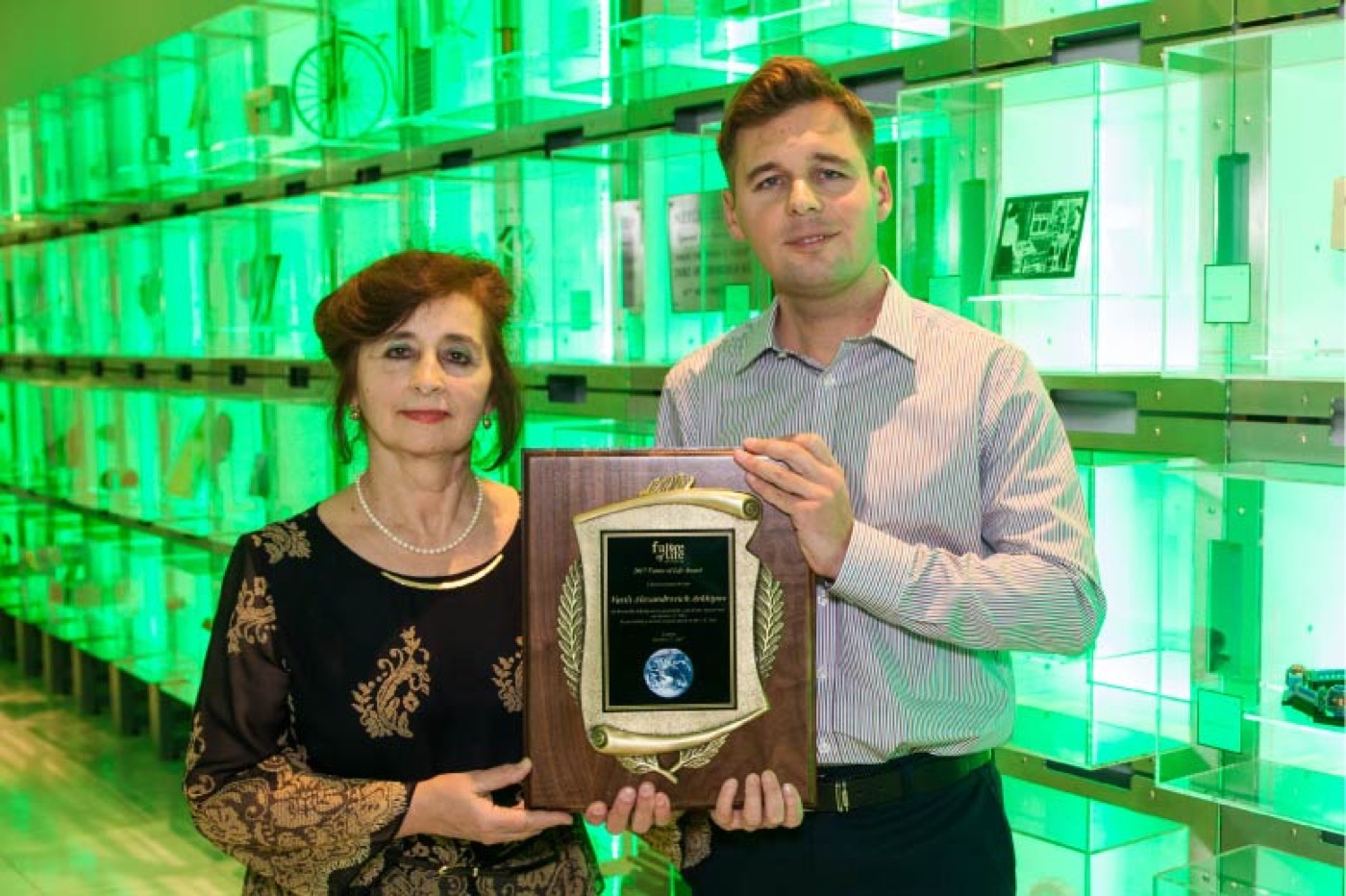
On 27 October 2017 — exactly fifty-five years after the B-59 incident — the Future of Life Institute presented its inaugural award to Arkhipov's family. The $50,000 prize recognises "those who take exceptional measures to safeguard the collective future of humanity." FLI President Max Tegmark presented the award to Arkhipov's daughter, Elena Andriukova, and his grandson, Sergei, at a ceremony in London.
"Vasili Arkhipov is arguably the most important person in modern history, thanks to whom October 27, 2017, isn't the 55th anniversary of World War III." — Max Tegmark, President, Future of Life Institute
Arkhipov's widow, Olga, did not attend the ceremony but gave testimony in the 2012 PBS documentary The Man Who Saved the World. She described her husband as "intelligent, polite and very calm," and recalled a superstitious streak — once she caught him burning a bundle of their love letters because he believed keeping them would bring bad luck.
"The man who prevented a nuclear war was a Russian submariner. His name was Vasili Arkhipov. I was proud and I am proud of my husband, always." — Olga Arkhipova
The B-59 incident was not an aberration. The survival of civilisation has rested, repeatedly, on the judgment of individual humans operating under extreme pressure with imperfect information.
Stanislav Petrov (26 September 1983). Lieutenant Colonel Petrov was the duty officer for the Soviet early-warning system when satellites erroneously reported that the United States had launched five intercontinental ballistic missiles. Petrov judged it a false alarm — the system, he reasoned, would not report only five missiles in a genuine first strike. He was correct. The false alarm was caused by sunlight reflecting off high-altitude clouds. Petrov received the Future of Life Award in 2018.
Able Archer 83 (November 1983). A NATO command-post exercise simulating a coordinated nuclear attack was interpreted by the Soviet military, operating under intense Cold War paranoia, as genuine preparation for a pre-emptive strike. Soviet forces in East Germany and Poland were placed on high alert. Bombers were loaded with nuclear warheads. The crisis ended only when the NATO exercise concluded on 11 November.
The Norwegian Rocket Incident (25 January 1995). Russian early-warning radar detected a fast-moving object over the Barents Sea matching the flight profile of a US submarine-launched ballistic missile. President Boris Yeltsin's nuclear briefcase — the cheget — was activated for the first and only confirmed time in history. Eight minutes into the ten-minute decision window, the object fell harmlessly into the ocean. It was a Norwegian scientific rocket launched to study the Northern Lights. Norway had sent advance notice. It had not reached the radar crews.
The same pattern, repeating across decades: a system designed to prevent catastrophe produces a moment where catastrophe becomes possible, and a single human being — operating with incomplete information, under pressure, against institutional momentum — makes the call that keeps the world turning. The architecture of nuclear deterrence has never been foolproof. It has been, at critical moments, person-proof: saved not by its design, but despite it.
B-59 was not the only submarine in the flotilla that came close to crisis. All four boats carried nuclear torpedoes. All four faced the same impossible conditions. Here is what happened to the other three.
Hounded by USS Blandy, B-130 suffered catastrophic mechanical failure when all three diesel engines broke down — an inability to separate fuel from water in the tropical conditions. Shumkov ordered the nuclear torpedo armed, but later maintained he did this merely to demonstrate dedication to Moscow. When his political officer objected, Shumkov relented, noting that at their range from the pursuing destroyer, "we would go up with it." B-130 surfaced on 29 October and was towed home to Murmansk by a Russian tugboat.
Hunted for 35 hours by USS Charles P. Cecil, Dubivko exhausted his batteries and was forced to surface on 31 October. But he later executed a remarkable tactical escape: diving directly beneath the American destroyer, using a high-frequency sonar ping to briefly blind the enemy's sonar, dropping to 200 metres, and slipping away into the deep. He was the only commander of a surfaced submarine to successfully evade recapture.
B-4 was the only submarine in the flotilla that evaded the US Navy dragnet entirely and was never forced to the surface. Ketov — who would later give crucial testimony to historian Svetlana Savranskaya — was a close friend of Savitsky's and described Arkhipov's temperament with clarity. On his own nuclear weapon, Ketov was unambiguous: "I had a written order that I could release it. And if there was an order to fire the torpedo I would do it without a second thought."
Readers should note that Vadim Orlov's testimony evolved between his 2000 interview with Peter Huchthausen and his 2002 Havana conference account. The 2000 version describes a relatively calm surfacing with "good-natured" Americans and a jazz band playing on a destroyer's deck. The 2002 version omits the jazz band entirely and introduces the dramatic, claustrophobic narrative of Savitsky shouting "We will sink them all!" Both accounts are Orlov's; neither can be independently verified. This article draws primarily on the 2002 testimony, which has become the standard scholarly account, while noting where it diverges from the earlier version.
Arkhipov's own 1997 account deliberately omits his intervention in the vote — a silence that complicates, but does not undermine, Orlov's testimony. The corroborating evidence from Ketov, Savranskaya's research, and the declassified Soviet documents supports the essential narrative: there was a confrontation, Arkhipov dissented, and the torpedo was not fired.